APD Technical Series · 30/30 · Field response
Rapid Response: Managing Critical Equipment Repair
The best emergency repair process restores safe operation quickly without turning a temporary fix into the next failure.
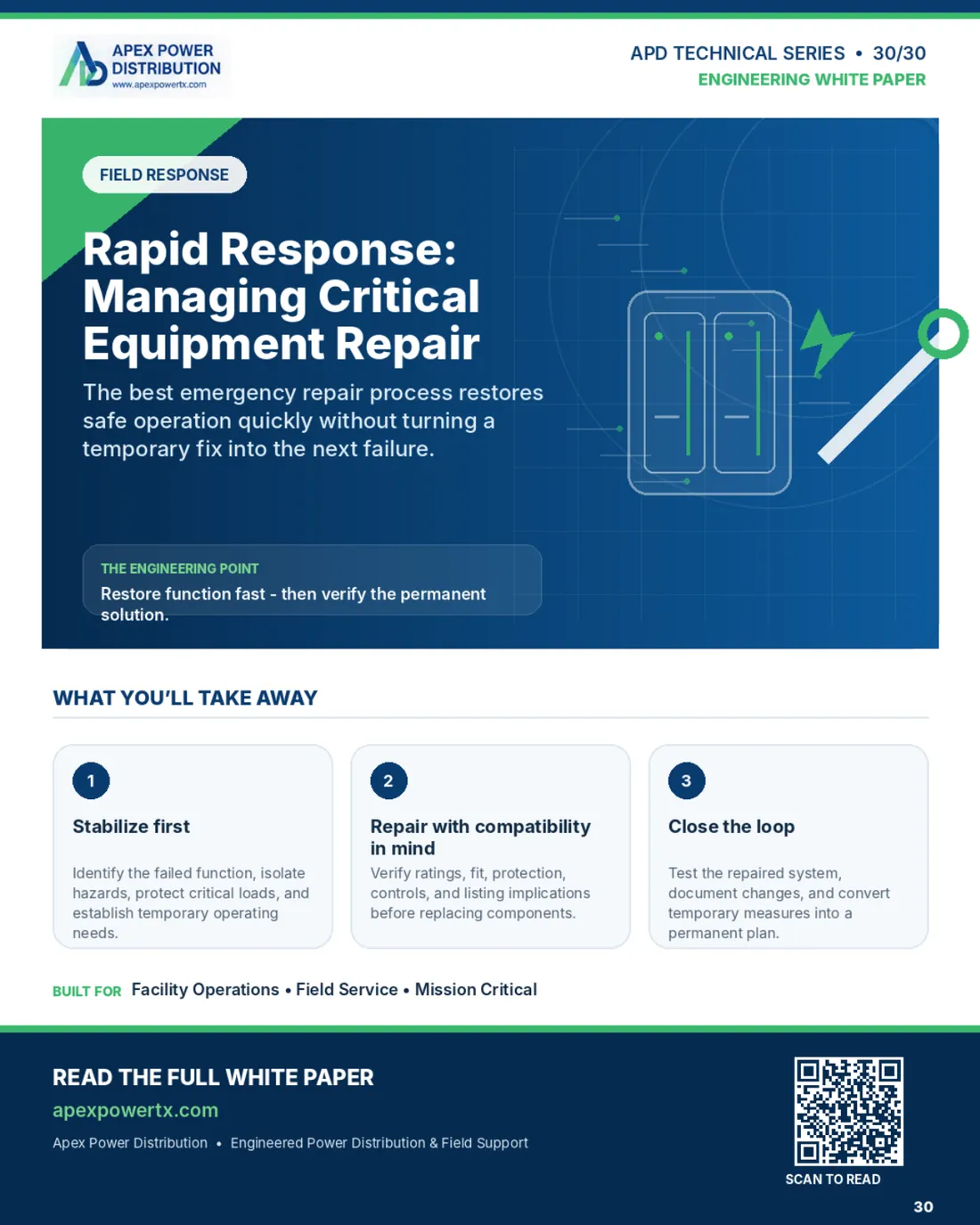
The engineering point
Restore function fast - then verify the permanent solution.
What you'll take away
Stabilize first
Identify the failed function, isolate hazards, protect critical loads, and establish temporary operating co.
Repair with compatibility in mind
Verify ratings, fit, protection, controls, and listing implications before replacing components.
Close the loop
Test the repaired system, document changes, and convert temporary measures into a co.
Built for
- Facility Operations
- Field Service
- Mission Critical
Go deeper
NFPA 70E, Maintenance and Switchgear Design Choices
NFPA 70E defines how a facility assesses and manages electrical hazards, and the numbers on an arc-flash label depend on equipment that operates as designed. This article connects the risk assessment methods, the effect of maintenance condition on incident energy, and the switchgear design choices that keep people outside the hazard in the first place.
Read the engineering articleMore in the series
Related flyers
15/30 · Maintenance
Maintenance Strategies for Emergency Power Systems
Emergency power reliability is built between outages through disciplined inspection, exercising, testing, and documentation.
Download PDFFor: Facility Operations · Healthcare