APD Technical Series · 01/30 · Transfer systems
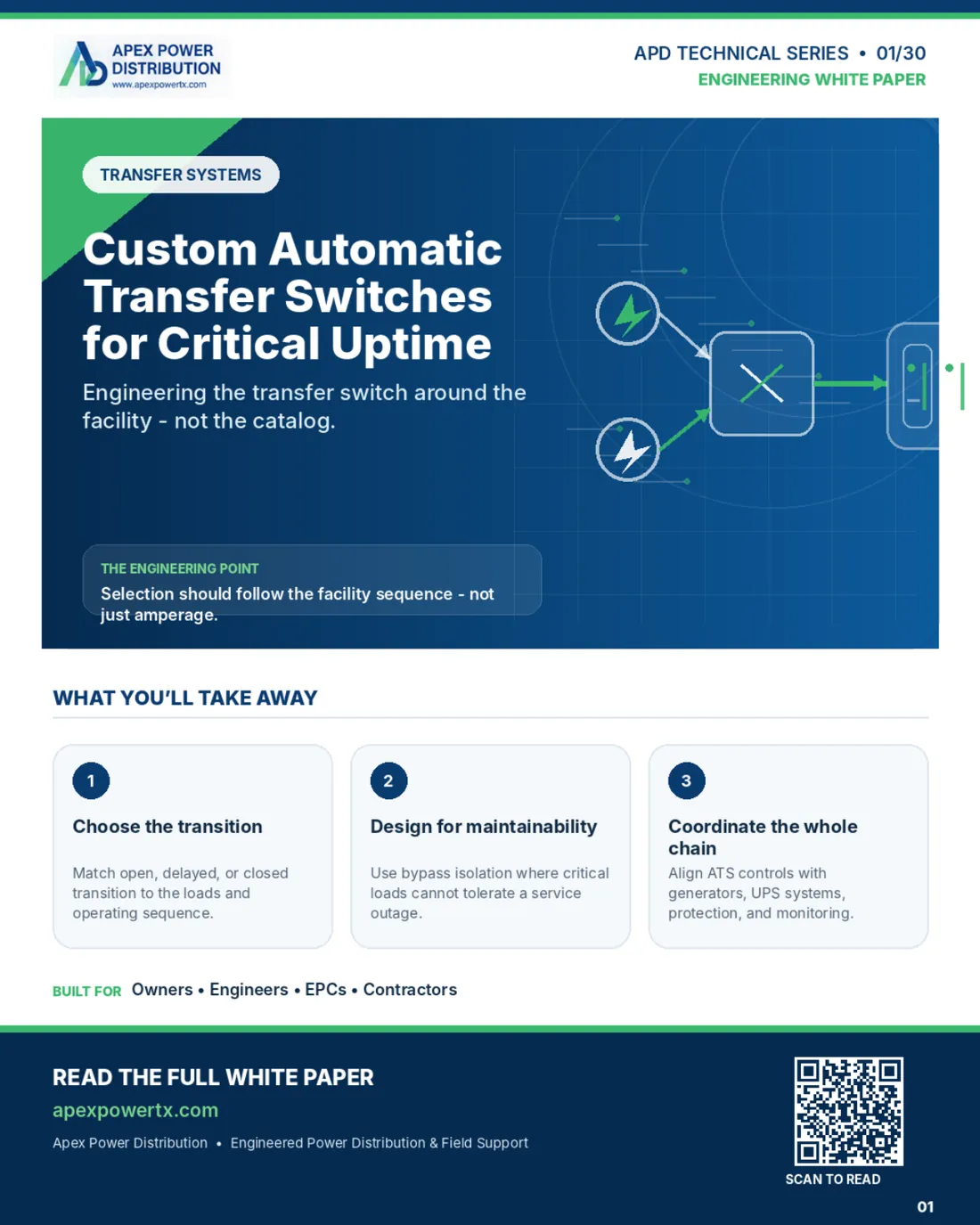
Custom Automatic Transfer Switches for Critical Uptime
Engineering the transfer switch around the facility – not the catalog.
The engineering point
Selection should follow the facility sequence - not just amperage.
What you'll take away
Choose the transition
Match open, delayed, or closed transition to the loads and operating sequence.
Design for maintainability
Use bypass isolation where critical loads cannot tolerate a service outage.
Coordinate the whole chain
Align ATS controls with generators, UPS systems, protection, and monitoring.
Built for
- Owners
- Engineers
- EPCs
- Contractors
Go deeper
Automatic Transfer Switches: Types, Transitions and Application
An automatic transfer switch moves a load between a normal source and an alternate source, usually a generator, and the way it makes that move decides what the load experiences. This article covers ATS construction and ratings, the three transition types, bypass-isolation and service-entrance variants, and the timing and code context that govern application.
Read the engineering articleMore in the series
Related flyers
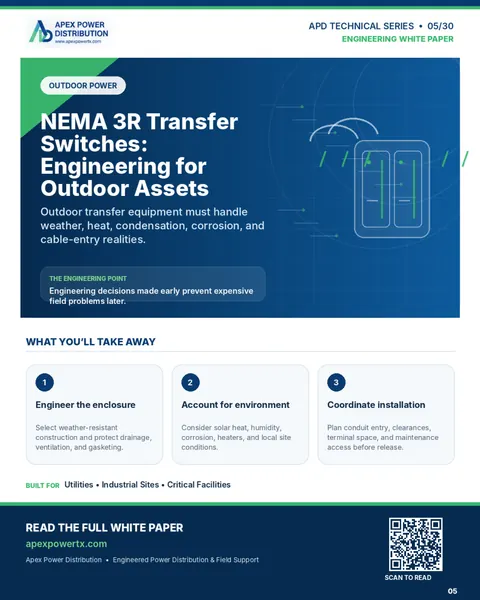
05/30 · Outdoor power
NEMA 3R Transfer Switches: Engineering for Outdoor Assets
Outdoor transfer equipment must handle weather, heat, condensation, corrosion, and cable-entry realities.
Download PDFFor: Utilities · Industrial Sites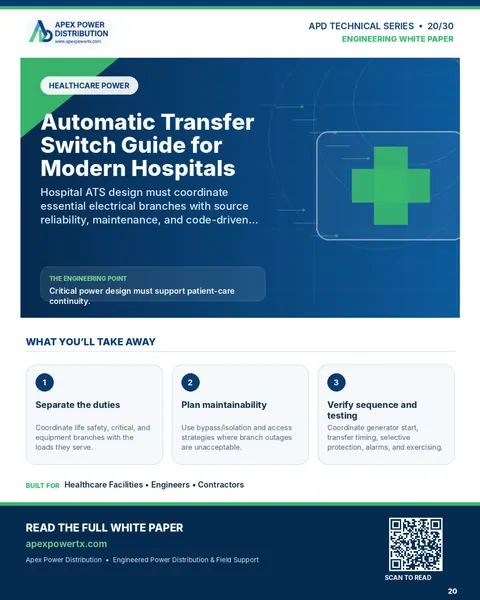
20/30 · Healthcare power
Automatic Transfer Switch Guide for Modern Hospitals
Hospital ATS design must coordinate essential electrical branches with source reliability, maintenance, and code-driven testing.
Download PDFFor: Healthcare Facilities · Engineers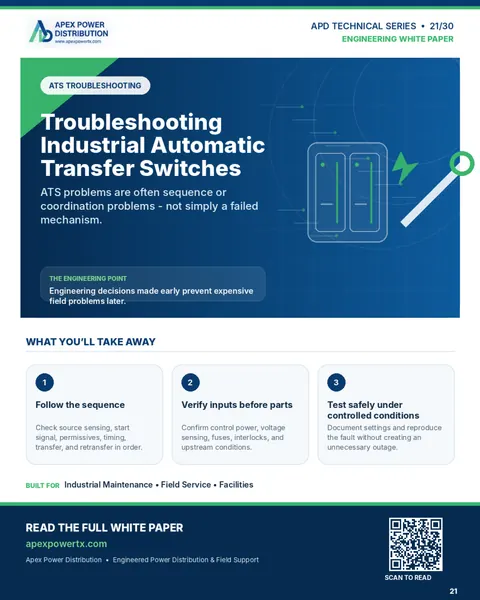
21/30 · ATS troubleshooting
Troubleshooting Industrial Automatic Transfer Switches
ATS problems are often sequence or coordination problems – not simply a failed mechanism.
Download PDFFor: Industrial Maintenance · Field Service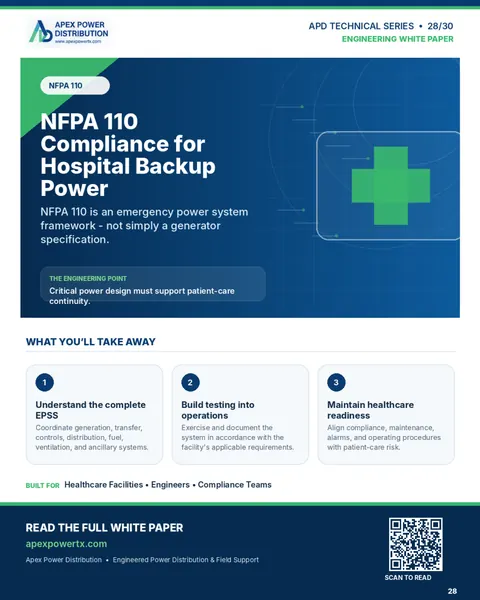
28/30 · NFPA 110
NFPA 110 Compliance for Hospital Backup Power
NFPA 110 is an emergency power system framework – not simply a generator specification.
Download PDFFor: Healthcare Facilities · Engineers