APD Technical Series · 26/30 · Life safety
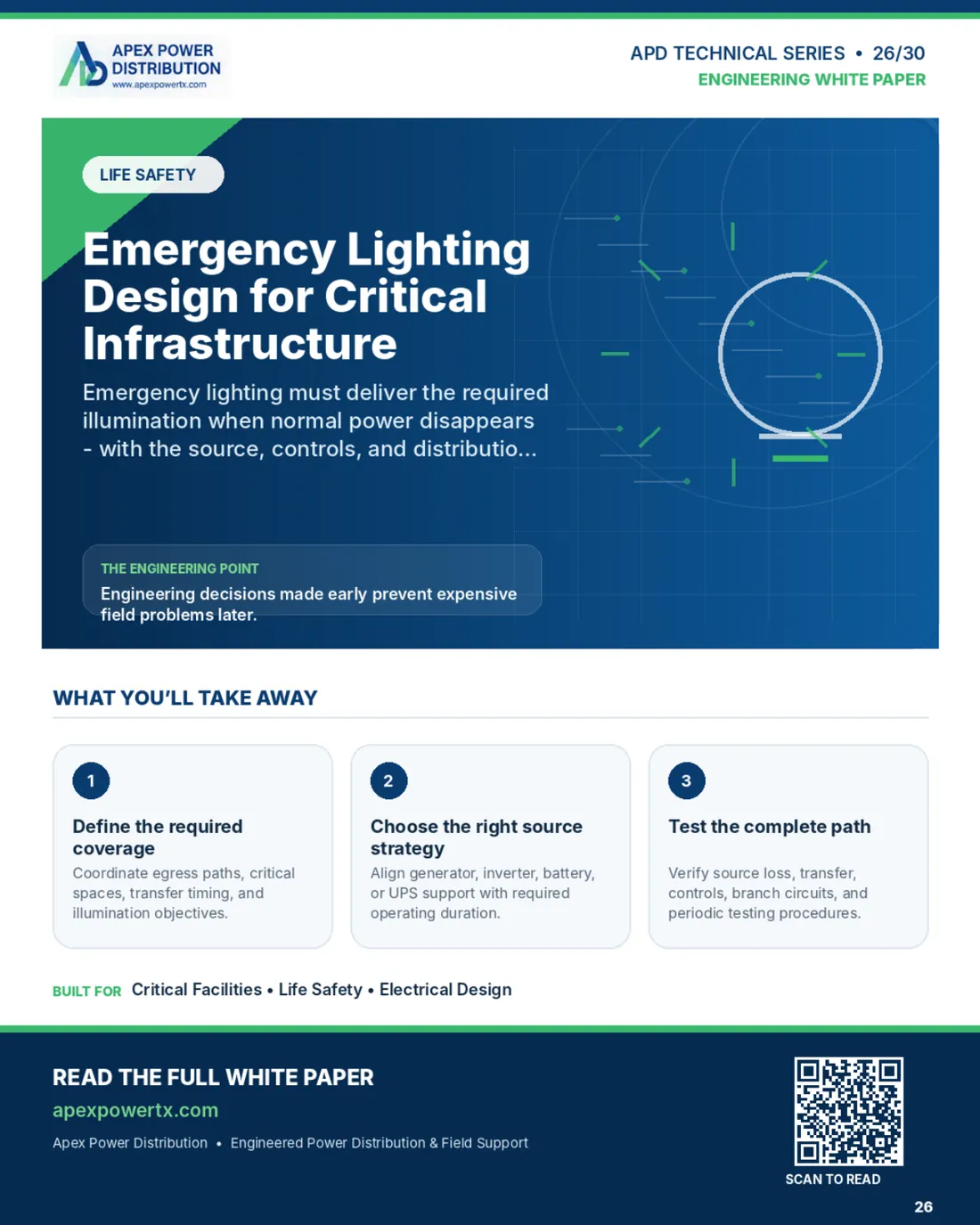
Emergency Lighting Design for Critical Infrastructure
Emergency lighting must deliver the required illumination when normal power disappears – with the source, controls, and distribution designed as one system.
The engineering point
Engineering decisions made early prevent expensive field problems later.
What you'll take away
Define the required coverage
Coordinate egress paths, critical spaces, transfer timing, and illumination objectives.
Choose the right source strategy
Align generator, inverter, battery, or UPS support with required operating duration.
Test the complete path
Verify source loss, transfer, controls, branch circuits, and periodic testing procedures.
Built for
- Critical Facilities
- Life Safety
- Electrical Design
More in the series
Related flyers
07/30 · Load banks
High Capacity Load Bank Manufacturing and Testing
A load bank must be engineered as a complete thermal and electrical system – not only a resistor package.
Download PDFFor: Generator OEMs · Commissioning Teams
09/30 · System integration
Load Bank Integration for Power Infrastructure Build
Load banks work best when testing access, temporary power, controls, and site logistics are designed in from the start.
Download PDFFor: Owners · EPCs
11/30 · Load testing
Why Industrial Load Bank Testing is Critical
A generator test without meaningful load can miss the exact problems that appear during a real outage.
Download PDFFor: Industrial Facilities · Generator Owners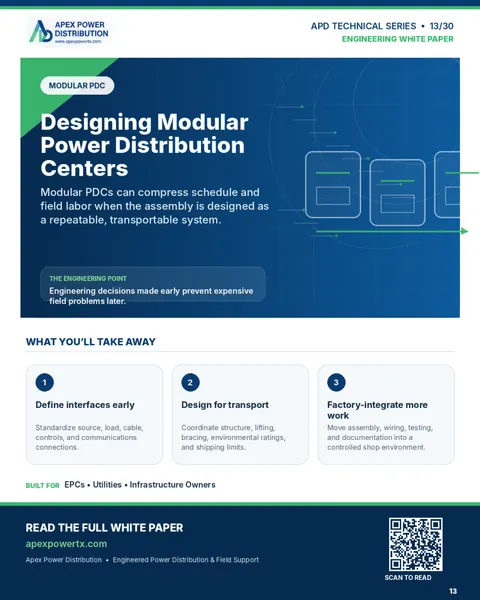
13/30 · Modular PDC
Designing Modular Power Distribution Centers
Modular PDCs can compress schedule and field labor when the assembly is designed as a repeatable, transportable system.
Download PDFFor: EPCs · Utilities