APD Technical Series · 22/30 · Power cabling
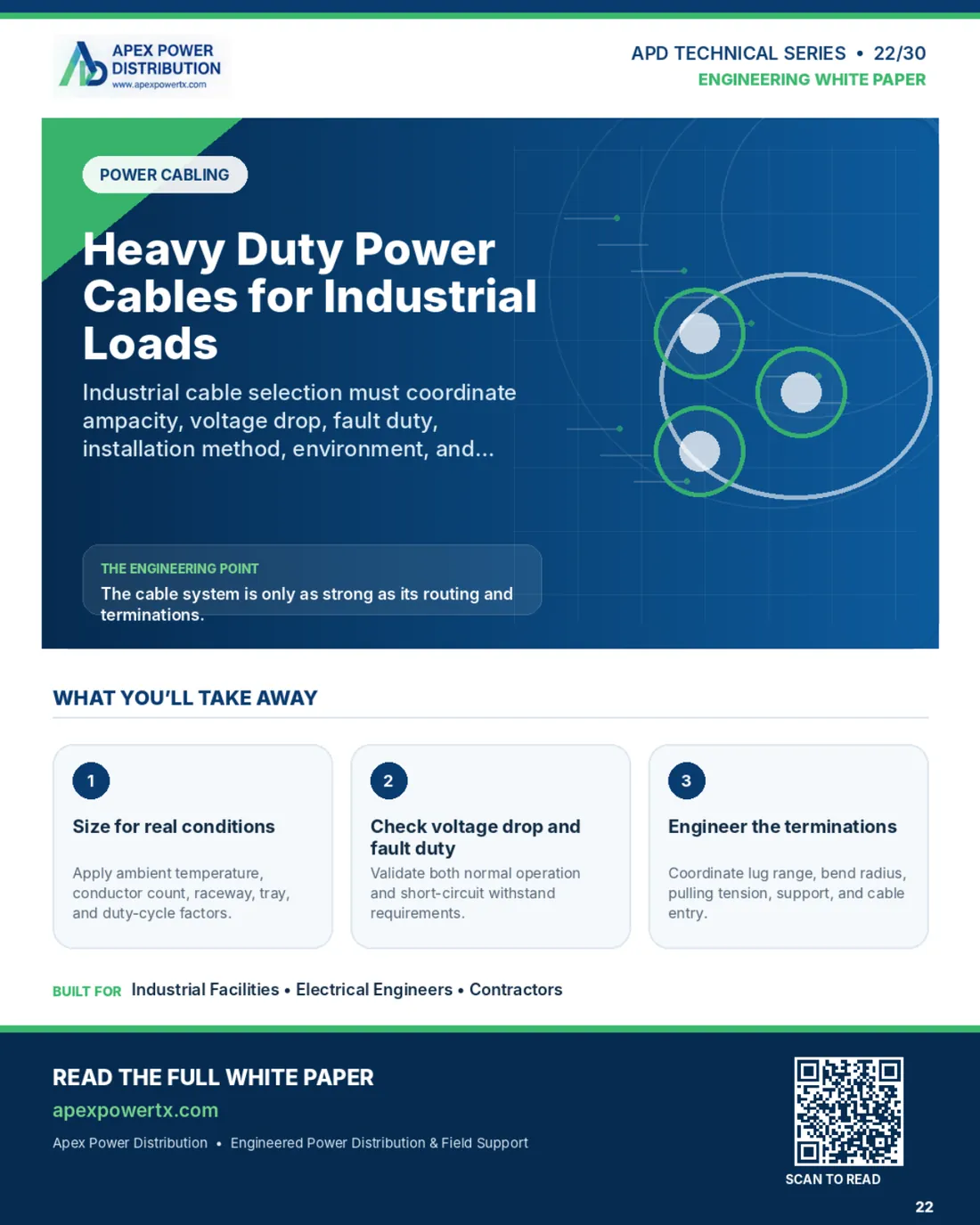
Heavy Duty Power Cables for Industrial Loads
Industrial cable selection must coordinate ampacity, voltage drop, fault duty, installation method, environment, and terminations.
The engineering point
The cable system is only as strong as its routing and terminations.
What you'll take away
Size for real conditions
Apply ambient temperature, conductor count, raceway, tray, and duty-cycle factors.
Check voltage drop and fault duty
Validate both normal operation and short-circuit withstand requirements.
Engineer the terminations
Coordinate lug range, bend radius, pulling tension, support, and cable entry.
Built for
- Industrial Facilities
- Electrical Engineers
- Contractors
More in the series
Related flyers
07/30 · Load banks
High Capacity Load Bank Manufacturing and Testing
A load bank must be engineered as a complete thermal and electrical system – not only a resistor package.
Download PDFFor: Generator OEMs · Commissioning Teams
09/30 · System integration
Load Bank Integration for Power Infrastructure Build
Load banks work best when testing access, temporary power, controls, and site logistics are designed in from the start.
Download PDFFor: Owners · EPCs
11/30 · Load testing
Why Industrial Load Bank Testing is Critical
A generator test without meaningful load can miss the exact problems that appear during a real outage.
Download PDFFor: Industrial Facilities · Generator Owners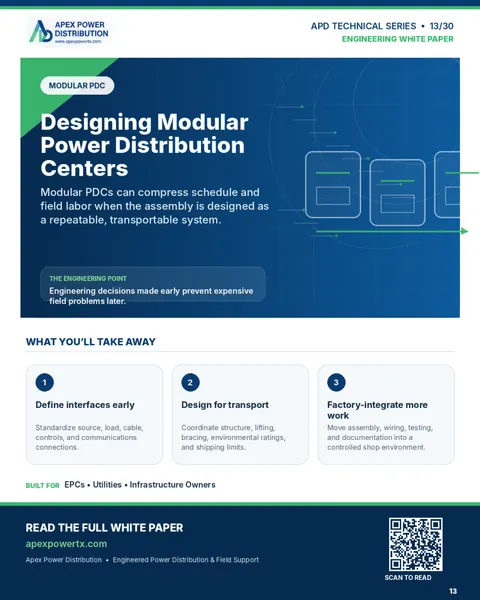
13/30 · Modular PDC
Designing Modular Power Distribution Centers
Modular PDCs can compress schedule and field labor when the assembly is designed as a repeatable, transportable system.
Download PDFFor: EPCs · Utilities